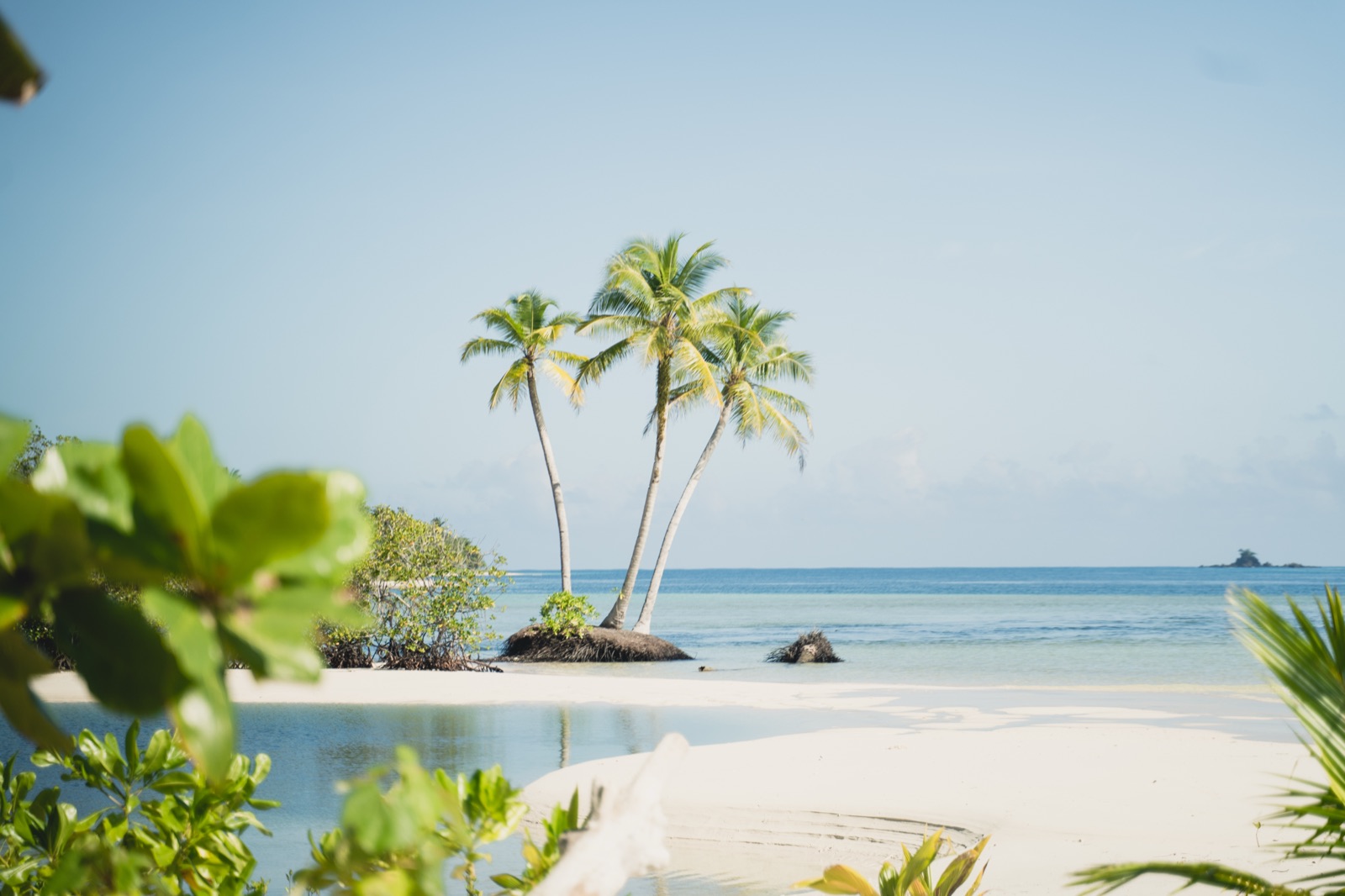
This isn't rehab. Mentawai is known for its world-famous waves and for how remote it is. Underneath both is something far greater, and it's the actual reason our sober retreat is here and not somewhere easier to reach.
Everything about the modern world is built to keep us moving: chasing the next win, managing stress through whatever quiets it fastest, food, drink, drugs, sex, the phone. Self-deserting addictions, all of them, different only in shape. Somewhere in all that movement, we lost presence. I started The Recovery Club because presence is our greatest gift, and I've watched too many talented people trade it away for something that felt like control. That's the actual mechanism this retreat runs on, not a slogan on a website.
The Water
The Mentawai Islands are legendary in surf culture: world-famous breaks a short boat ride away, calm bays for paddleboarding and snorkelling right on the doorstep. The island caters to every ability, from clients who've never stepped on a board to those surfing at a professional level, so nobody's shut out of the water and nobody's held back from the breaks they came for. Good surf is a real draw for the retreat, but it's not really the point. Addiction, in one form or another, teaches you to live from the neck up: manage it, override it, think your way past it. Time in the water is one of the most direct ways back into the body you left behind doing that.
There's a real, physical reason water does this. Cortisol, the stress hormone, doesn't spike during cold water immersion. It drops afterward and stays down for hours from a single session. Endorphins and noradrenaline both rise. Full-body immersion switches on the body's alert system; putting just the face in water switches on the opposite one, the rest-and-digest response, almost like a reset switch. None of that requires believing in anything. It's just what water does to a nervous system that's been switched on too long.
The Culture
The Mentawai are among the world's oldest surviving tribal cultures: traditional tattooing, shamanic healers, a way of life barely changed in thousands of years. Clients spend a three-day off-grid stretch with a local Mentawai community during the retreat, and volunteer weekly at the local school in partnership with Ocean School, a community nonprofit on the island.
It isn't sightseeing. You don't watch this life from a boat window. You live inside it for three days, off-grid, without the usual distance a tourist keeps. That distance is normally what makes contact with another way of living forgettable. Without it, this tends to actually land.
What it puts in front of you is a full, contented human life built around almost none of what you've spent years chasing. Not the next win. Not the next thing to acquire, manage, or numb. Just health, and each other. It's one thing to be told status and accumulation aren't where contentment lives. It's another to spend three days inside a community where that's simply how life has always been done. No theory required.
There's real research behind why this kind of contact works the way it does. Across studies of traditional societies, wellbeing consistently comes down to two things: health and relationships, not income or possessions. Researchers describe moderate contentment as simply the normal human baseline, the thing that doesn't need explaining, unlike unhappiness, which does. Separately, scientists who study awe have found that experiences vast or unfamiliar enough to not fit your existing picture of the world measurably shrink self-focus. Brain scans show the self-referential part of the mind actually quiets down, and the effect isn't just a passing mood: a year after one such experience, people were still measurably kinder than before. Seeing a full life built on almost none of what you've been chasing tends to have exactly that effect.
When It Goes Quiet
Many people look at this place and think: paradise. It is. But paradise isn't the same as easy.
Worth saying plainly: there's strong 4G across the whole island. Clients still take work calls, stay in touch with family, and manage what needs managing. The quiet that matters here has nothing to do with signal. It's what happens when the noise you've been running from stops having anywhere to hide.
When meetings and notifications and the next thing to chase go quiet, even for an hour, the noise you've been medicating, drinking, scrolling, or numbing away tends to resurface. That's not a flaw in the sober retreat. That's the work starting, and it's the same work that was always underneath the addiction in the first place.
A nervous system that's spent years running on stress and stimulation doesn't downshift the moment the noise stops. It's been living in some version of fight-or-flight, or shutting down entirely just to get through the day, and it takes real safety, sustained, before it's willing to let go of either. That's what the quiet here is actually for. Not the absence of a problem. The condition presence needs to come back.
I've watched this happen with almost every group who's come through: the first two or three days are the hardest, not the last. Then something loosens.
The waves get you here. What you do with the quiet after that is yours to keep.